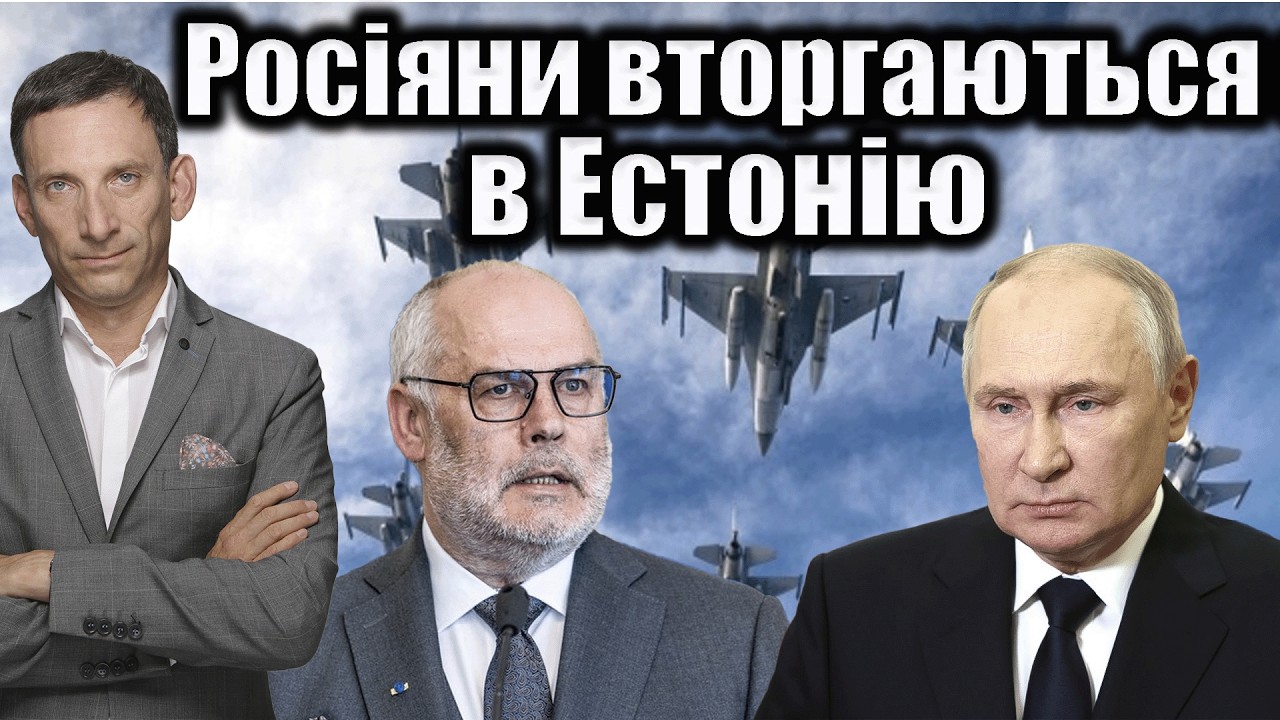
Russian MiG-31 fighter jets, capable of carrying Kinzhal hypersonic missiles, entered Estonian airspace and remained there for 12 minutes. This marks the fourth recent airspace violation by Russian aircraft, but the first time they stayed so long and approached Tallinn.
Estonia's Foreign Minister Margus Tsahkna described the incident as unprecedented. Italian F-35 fighters, deployed by NATO to patrol Estonian skies, responded to intercept the Russian jets.
Russian provocations, including drone attacks on Poland, are becoming more frequent. Meanwhile, according to Vitaly Portnikov, the U.S. response looks restrained—Donald Trump has highlighted that the drone incursions into Polish airspace were allegedly caused by Ukrainian military actions.
Portnikov points out that such a stance allows for further Kremlin provocations and forces European countries to prepare for more assertive Russian actions. There are lingering concerns about hybrid warfare and the potential use of Estonia's Russian minority in border regions to destabilize the country.
Kremlin's main objective remains to intimidate Europe and influence Western aid to Ukraine. Building pro-Moscow governments in European countries remains a strategic goal for President Putin.
Thus, the situation around Estonia and rising Russian provocations highlight the need for a consolidated NATO and European response amid shifting American leadership positions.