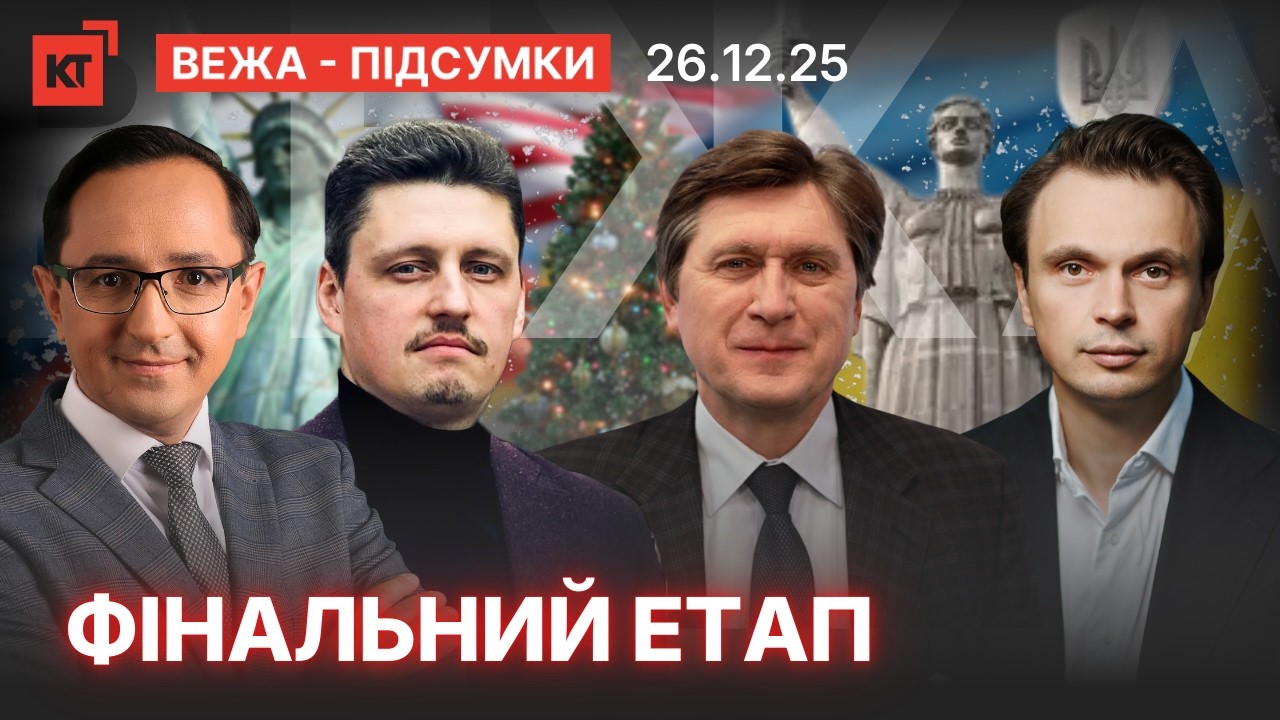
On December 26, the Center for Public Analytics “Vezha” held its annual year-end panel with leading political analysts Mykola Davydiuk, Ihor Reiterovych and Volodymyr Fesenko. The central topics were the prospects for ending the Russia-Ukraine war, ongoing negotiations between Kyiv, Washington, and Moscow, and the political challenges of holding possible elections during wartime.
Experts discussed news about ongoing talks, a possible Ukraine-US presidential meeting before New Year’s, the content of a peace plan coordinated with the US and Europe, and the cautious reactions from Russia. Key issues included troop withdrawal from Donbas, the status of occupied territories, the mediators’ role, and the possibility of using referendums for external legitimation of negotiated solutions.
The discussion noted that holding elections during war remains unlikely without a ceasefire. Analysts pointed out that political dynamics depend largely on the positions of the US, Russia, and to some extent the EU. There is cautious optimism regarding a potential peace deal, but significant risks for Ukraine’s statehood and the legitimacy of any authorities if decisions are rushed.
In summary, the speakers concluded that peace negotiations have reached a critical stage, but their outcome depends on Moscow’s responses. The public release of peace plan details is meant to prepare society for possible changes. Ukrainian politicians face a dilemma: end the war swiftly or safeguard unity and sovereignty.
The panel showed that Ukraine’s political future remains highly uncertain, with external players continuing to influence the negotiation process and prospects for ending the war.