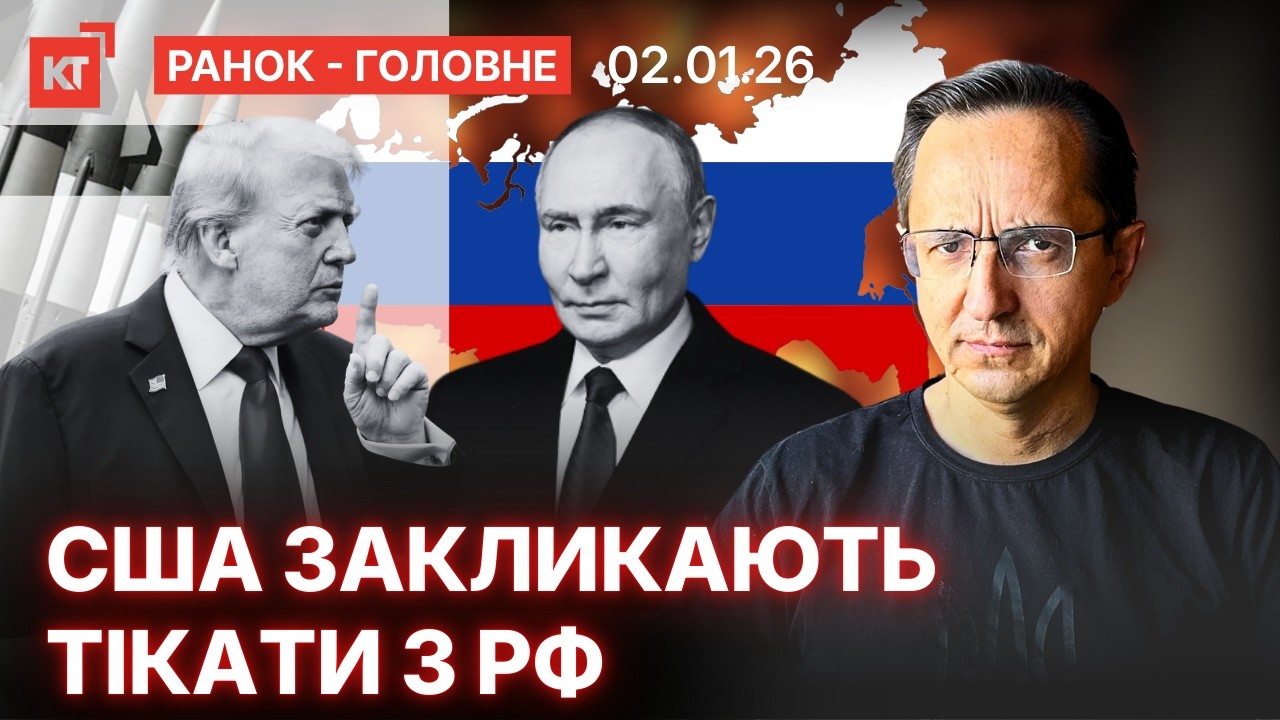
On January 2nd, Lyry Kluchok discussed several important topics. Russia's economy has entered stagnation: according to Russia's Ministry of Economic Development, GDP in November 2025 grew only 0.1% year-on-year, the worst showing in two years. Industrial production declined by 0.7% in November, with even pro-Kremlin analysts warning of increased recession risk in 2026. The main pillars supporting the Russian economy have nearly been exhausted.
Amid this, a more pro-Russian rhetoric is emerging in the European Union. Slovakia's Defense Minister Robert Kaliňák stated that Ukraine will not become a NATO member and that its EU accession will be problematic. Czech Parliament Speaker Tomio Okamura spoke out against supporting Ukraine, emphasizing that the EU should not spend resources on the Ukrainian war.
EU member states continue to debate the possibility of forming a common army; political disagreements persist. The issue of purchasing Russian gas also remains controversial.
In the past day, Russia launched a massive drone attack on Ukraine: 116 drones were fired with 86 shot down, but there was still infrastructure damage and civilian injuries. The Russian Defense Ministry claimed a drone strike on Putin's residence, but US authorities did not confirm the information.
The US Department of State once again recommends its citizens avoid travel to Russia due to risks of arbitrary detention, limited consular assistance, and sanctions. The US also reacted to rising Chinese military activity near Taiwan, urging Beijing not to escalate tensions in the region.
In the Baltic Sea, an investigation is underway into possible sanctions violations after a ship damaged undersea cables and transported sanctioned goods. European officials stress increasing risks to EU critical infrastructure from hybrid threats.