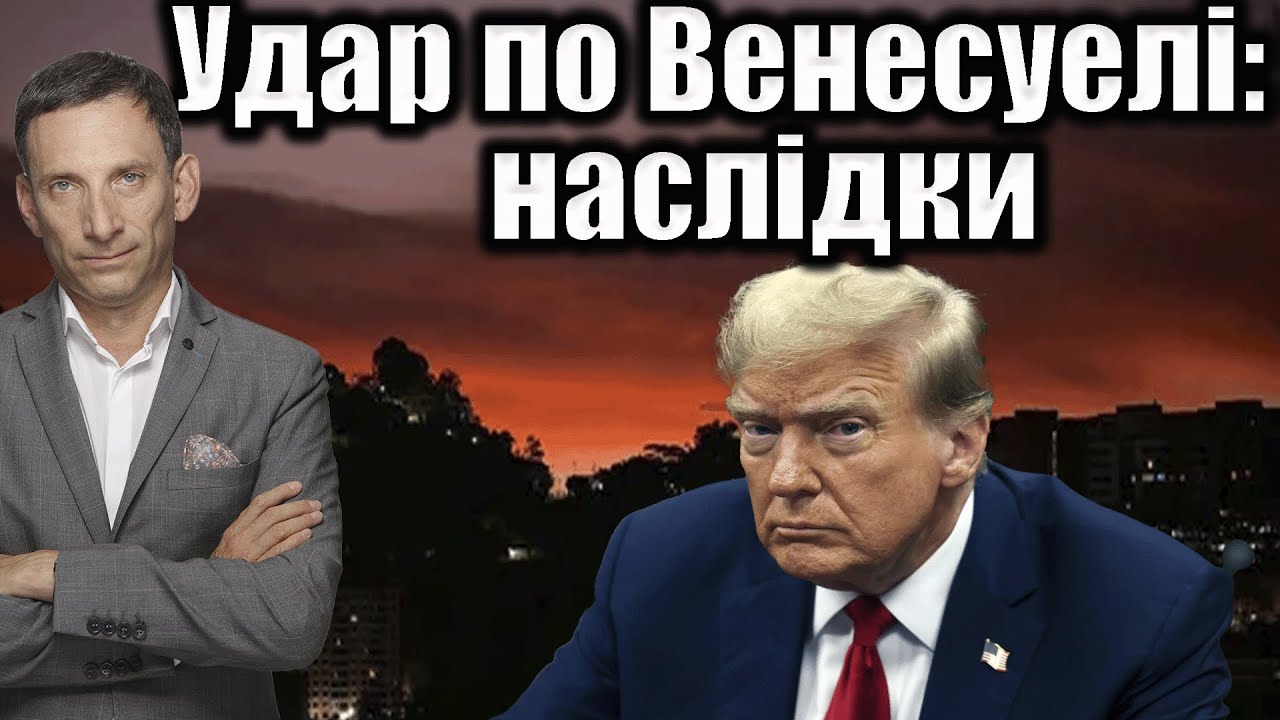
Vitaliy Portnikov summarizes the initial results of the US strike on Venezuela, focusing on Donald Trump's reaction, the responses of the Venezuelan leadership, and the possible geopolitical implications for the oil market.
The US conducted a brief special operation overnight, lasting only 30 minutes, which resulted in the capture and extraction of Venezuelan President Nicolás Maduro to the US. However, other representatives of the regime remained in power, with Vice President Delcy Rodríguez sworn in, declaring Maduro as the only legitimate president and demanding his release.
Trump announced his intention to govern the country during the transitional period in cooperation with the current Venezuelan leadership, refusing to engage with the opposition. In turn, Delcy Rodríguez adopted a more confrontational tone towards the US and emphasized the continuity of the Chavista regime.
According to the expert, real power remains with the security authorities—the ministers of defense and internal affairs. These individuals are ready to cooperate with the US but maintain full control over Venezuela’s situation. Trump decided not to support opposition leaders, whose election victories were marred by alleged fraud.
Portnikov pays special attention to the oil factor: Venezuela's reserves are vast, but exploitation and the return of US companies would take years or even decades. Strategically, the US aims for control over these resources, even if immediate benefits are unlikely.
After the operation, the Chavista-Maduro regime’s official stance remains unchanged, while the opposition’s influence is limited. Several international leaders, especially from Russia and Latin America, voiced support for Venezuela’s new leadership and criticized US actions as violations of sovereignty.
The key issue is whether Washington will opt for a large-scale military intervention or rely on behind-the-scenes deals with Venezuela’s military elite. The US administration’s decisions will determine not only Venezuela’s future but also the balance on the global oil market.
Portnikov draws parallels with previous US operations and considers how such actions may influence relations with Russia and domestic US politics.