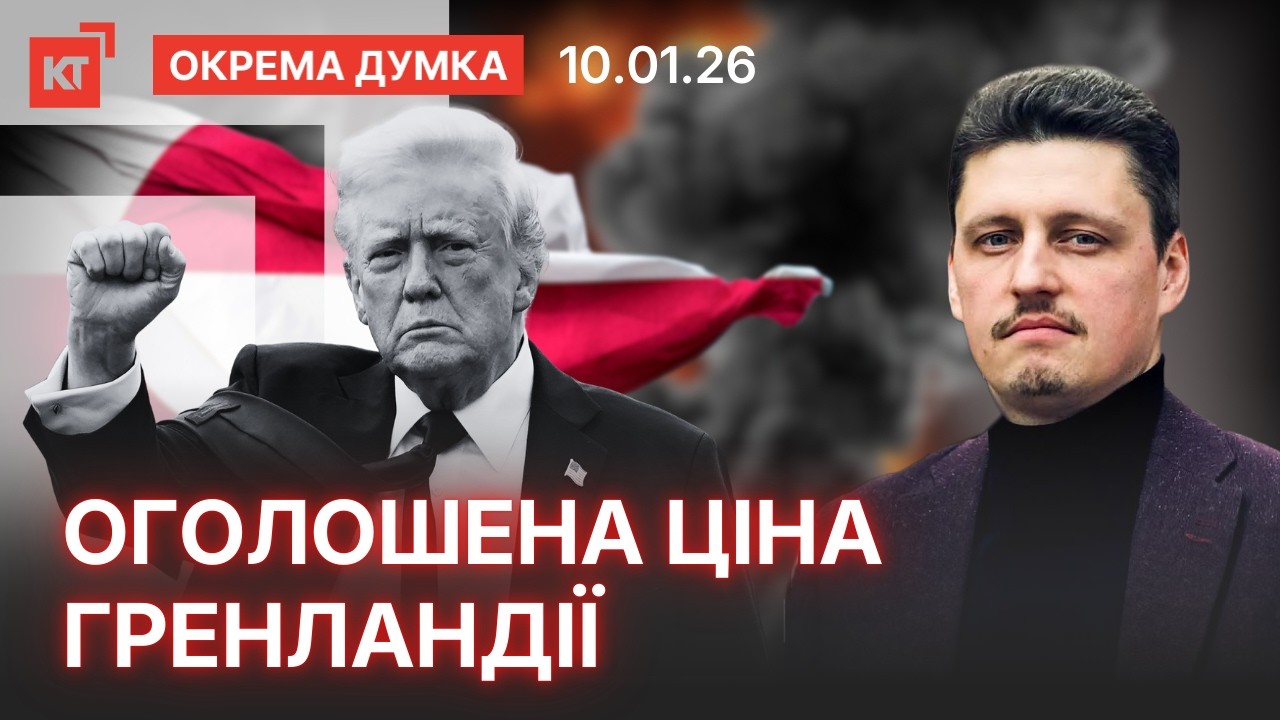
Political analyst Ihor Reytarovych shared his view on the impact of former US President Donald Trump's meeting with American oil and gas company leaders regarding the potential entry into Venezuela's market. According to Reytarovych, the companies currently show limited interest due to instability and unpredictability in Venezuela.
Interestingly, much of the discussion shifted from oil and Venezuela to Greenland. Trump again expressed his intent to annex the island to the United States, stating that regardless of Denmark’s opinion, Americans were ready to act decisively. He pointed to security reasons—particularly the desire to prevent Russian and Chinese warships from operating in the region—as key arguments for this stance.
Trump also expressed willingness to conduct business with China and Russia but cautioned against their influence in Venezuela. The issue of seized tankers was mentioned as well, with Trump describing this as an effective means of tackling the shadow fleet, rather than introducing sanctions or port bans.
Trump’s territorial claims regarding Greenland drew criticism in the US Congress due to their ambiguity. He further elaborated on the belief that actual ownership of territory is crucial for defending it, drawing analogies with NATO policy and US alliances in Europe.
Turning to Russia and Ukraine, Trump said he currently does not see the need for radical actions and voiced disappointment in President Putin, suggesting the possibility that the US could change its stance toward Russia, particularly in regard to the Ukraine war. The key message: While Putin does not fear Europe, he does take into account the US position.
Reytarovych noted that Trump’s statements about Greenland could have unpredictable consequences in international politics and have already sparked criticism among some Republicans. Developments around Greenland and the Russia-Ukraine war will remain closely watched by analysts.