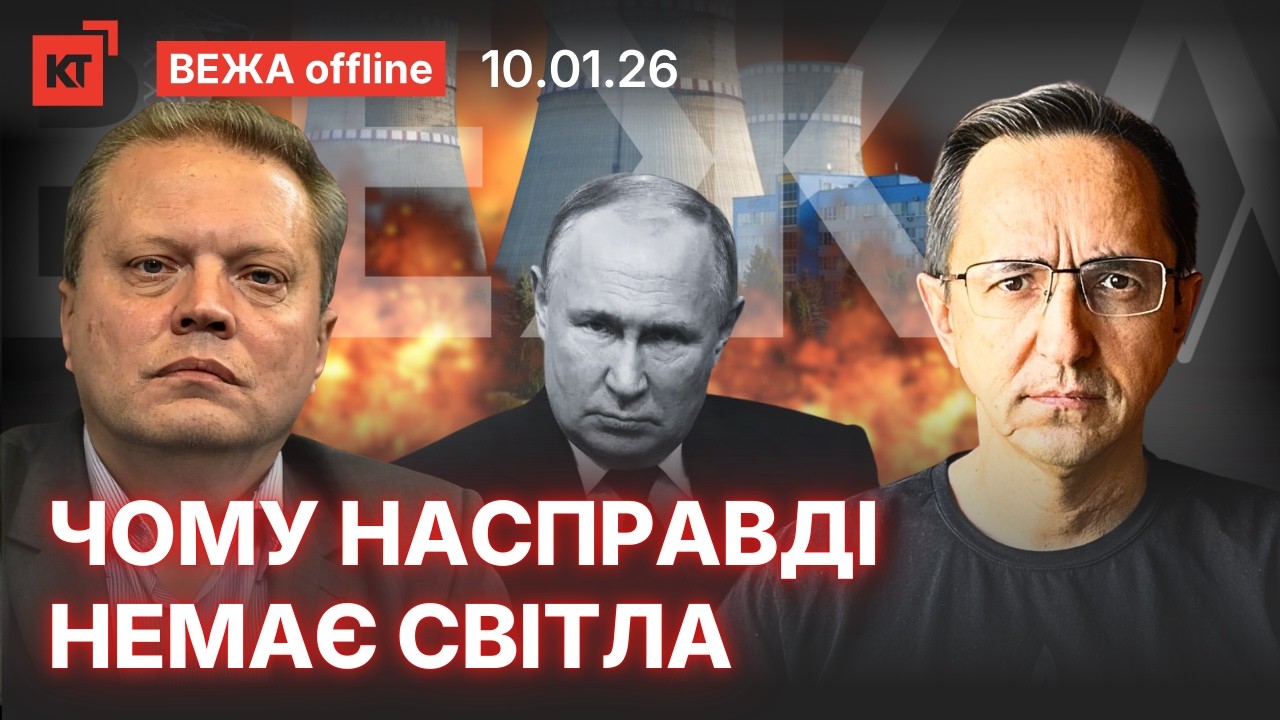
On January 10, the Veza Public Analytics Center hosted an interview with Volodymyr Omelchenko, Director of Energy Programs at the Razumkov Center. The main focus was the situation in Ukraine's energy sector following massive Russian strikes on infrastructure.
According to the expert, the situation remains challenging in cities such as Kyiv, Kryvyi Rih, Dnipro, Lviv, and Odesa region. The missile strikes led to prolonged power outages, partial shutdown of public transport, and disruptions to water and heating supplies. The situation is particularly serious on Kyiv's Left Bank, where power supply is available for only a few hours per day.
Omelchenko explained that Russia is seeking to fragment Ukraine's energy system into isolated parts and maximize damage by targeting generation and transmission infrastructure, creating power shortages in the most energy-consuming areas. Kyiv and the Kyiv region have suffered from hits on power plants and substations, but the rapid response of energy workers has helped partially restore infrastructure.
The expert emphasized the need for a centralized coordination center to unite the efforts of energy companies, local authorities, and government agencies. He also highlighted the importance of communicating clear action plans to citizens in emergency situations.
The discussion also covered international aspects, particularly the rhetoric of Donald Trump, who aims to control the global oil market by influencing Venezuela and weakening Russia and China's energy positions. Omelchenko noted that US control over Venezuelan oil is more about political leverage than market influence.
Significant attention was given to the protests and political crisis in Iran, and the potential impact of a regime change on the oil market and Russia's position. The expert believes that a change of power and lifting of sanctions on Iran may lead to lower oil prices and reduced funding for Russia’s military campaigns.
In summary, Volodymyr Omelchenko stressed that increasing international pressure, Russia's internal energy crisis, and potential changes in Iran are likely to weaken the Kremlin's negotiating position on ending the war in Ukraine.