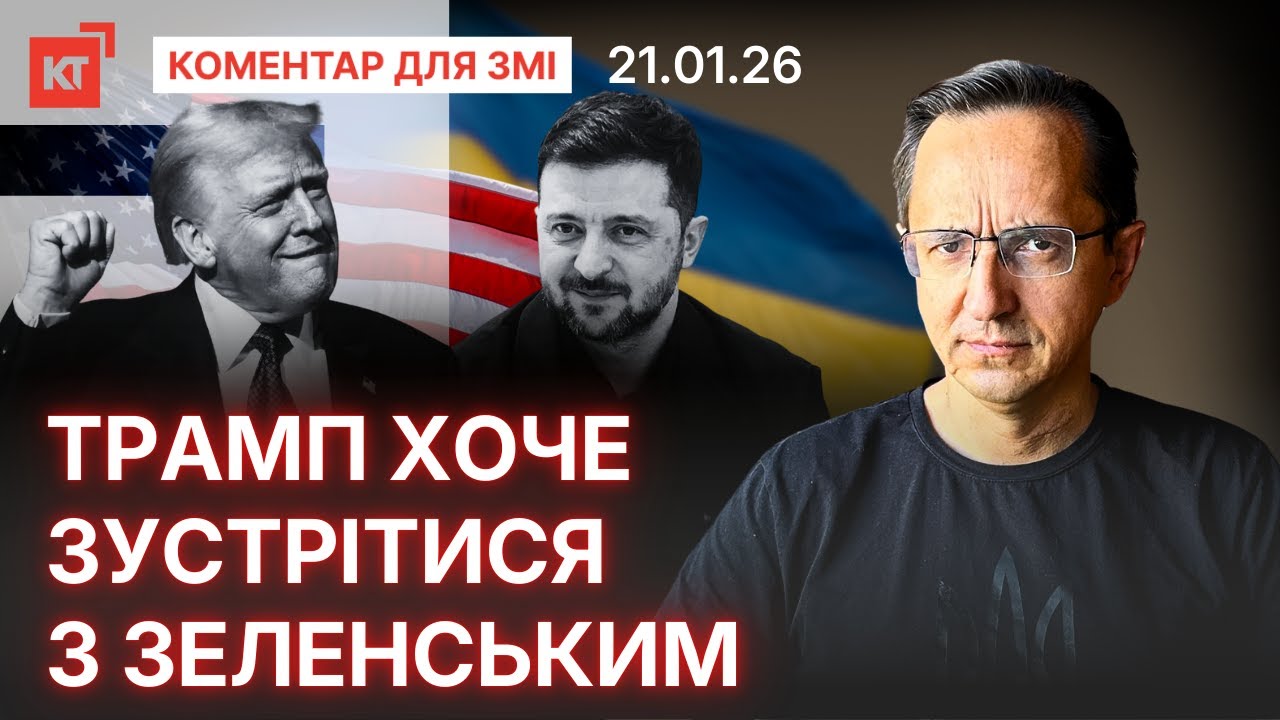
During the Davos Economic Forum, Donald Trump brought up the war in Ukraine, highlighting his intention to help settle the conflict. He also expressed a desire to meet with Volodymyr Zelenskyy to discuss a possible peace agreement with Russia.
Commenting on this, public figure Valeriy Klychok noted that there was no confirmed information that President Zelenskyy was present in Davos, as both Ukrainian and international media reported he stayed in Kyiv due to the energy situation. The expert stressed that the US, Ukraine, and Russia have not yet reached agreed-upon positions regarding peace. Negotiations are ongoing, with parties exchanging proposals, but a comprehensive compromise has not yet been reached.
Klychok observed that Western states are increasingly focused on their own interests. He pointed out that Western media's coverage of the war is declining, while European countries have lost subjectivity in the negotiation process and have become more dependent on US decisions. Each side acts in self-interest, while aid remains primarily a political tool for both Ukraine and the EU.
The expert also commented on statements by Trump's special representative Steve Witkoff, who spoke of a nearly finalized peace plan. However, Klychok believes a true resolution is not imminent, with ongoing discussions about various conflict cessation models. Key obstacles include the issue of sanctions, security guarantees for Ukraine, and the policies of major powers toward Russia and China.
Klychok emphasized that the US is using the issue of Ukraine in a broader geopolitical context, particularly in relation to pressure on China. In his view, Trump is primarily interested in US benefits rather than the interests of Ukraine or Europe.
Regarding trade disputes, especially concerning Greenland, Klychok considers real US assistance to Ukraine to be limited to political support, leaving Ukraine with the responsibility to defend its own interests internationally.