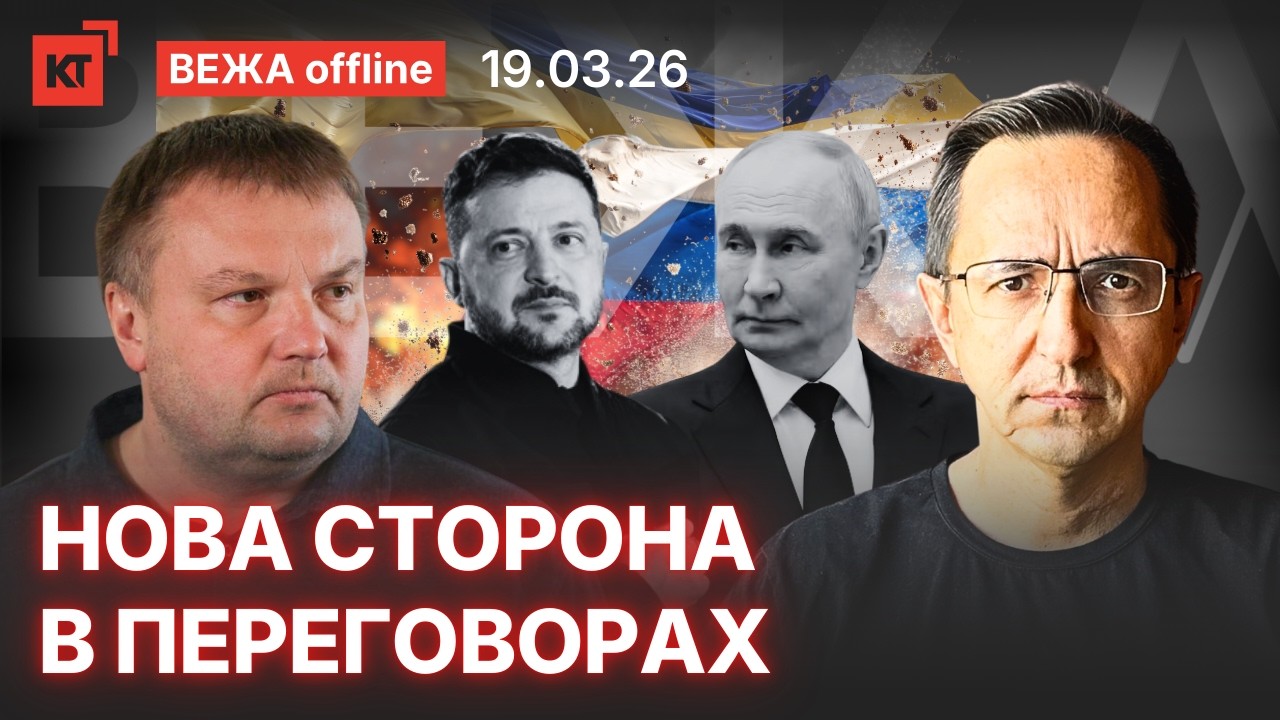
On March 19, the Center for Public Analytics "Vezha" hosted a discussion between director Valerii Klochuk and political analyst, head of the "Dylova Stolitsya" think tank, Vadym Denysenko, regarding the current state of negotiations between Russia and Ukraine.
According to experts, the main reason for the pause lies in Russia's lack of willingness to continue the dialogue and the absence of leverage from Trump, who previously encouraged talks. The ongoing war in the Middle East and uncertainty regarding global security further exacerbate this deadlock.
Vadym Denysenko emphasizes that the Kremlin has always avoided genuine agreements, only imitating participation under pressure from the U.S. Currently, with Trump acting on many fronts and involved in various global conflicts, the prospects for constructive negotiations are deemed low.
The experts argue that if the Middle East war is short-lived, negotiations could resume in spring. However, if the conflict drags on, the process may be delayed until at least autumn, or possibly until 2029, should dynamics in the U.S. and Europe remain unchanged.
The discussion also noted that, apart from the U.S., negotiations involve several European countries—France, Germany, and, to a lesser extent, the UK—while China has not yet shown willingness to join, waiting for clearer balance-of-power signals.
In conclusion, the current pause in talks is linked not only to events in Iran but also to a broader lack of trust and coherent strategy among key players. The future of the negotiation process depends on developments in the Middle East, Trump’s tactics, Europe's position, and the possible involvement of China. Experts predict no rapid progress, expecting the next stage only in autumn or after a shift in the international landscape.