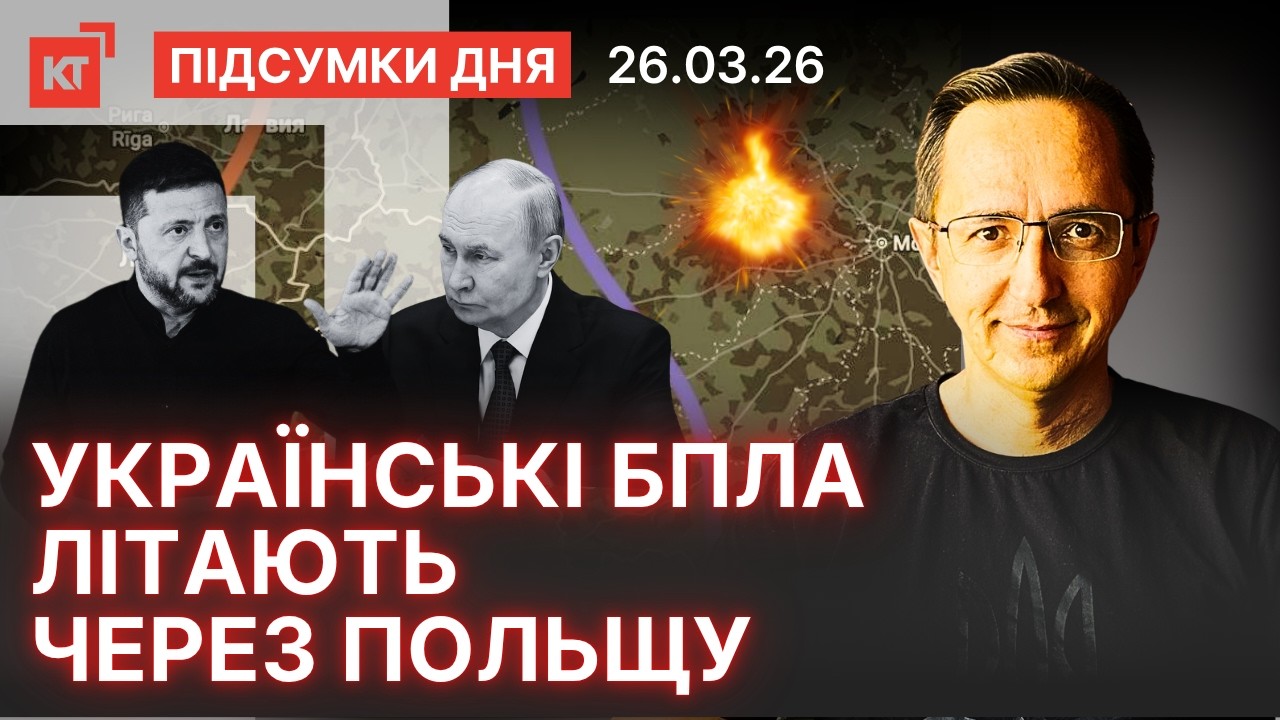
March 26 saw significant statements about energy security and rising global political tension. NATO Secretary General Mark Rutte warned that if Russia attacks NATO countries, energy infrastructure could become the main target. The Alliance is increasing training to defend critical facilities, learning from the war in Ukraine.
The U.S. is debating whether to redirect air defense aid from Ukraine to the Middle East due to the Iran conflict. While officials deny this, former President Trump confirmed such practices, and President Zelensky has called for continued defensive support, announcing that Ukraine could produce up to 2,000 intercept drones per day with sufficient funding.
Meanwhile, Volodymyr Zelensky traveled to Saudi Arabia to discuss security cooperation. Former commander Valerii Zaluzhnyi, in recent articles and speeches, stressed the need for unity among Western democracies, urging a review of security principles and modernized armaments.
On the battlefield, shelling continues in cities like Dnipro, and the increased use and movement of drones is discussed. Russia is delivering modernized Shahed drones to Iran, while Israel has struck Iranian military targets. The U.S. is reportedly considering multiple options in the region, including blockading Iranian islands and oil cargoes.
Political tension also remains high within Ukraine, where recent polls show Zelensky, Zaluzhnyi, and Budanov have the most public support. The ongoing war has shifted political alignments and affected alliances.