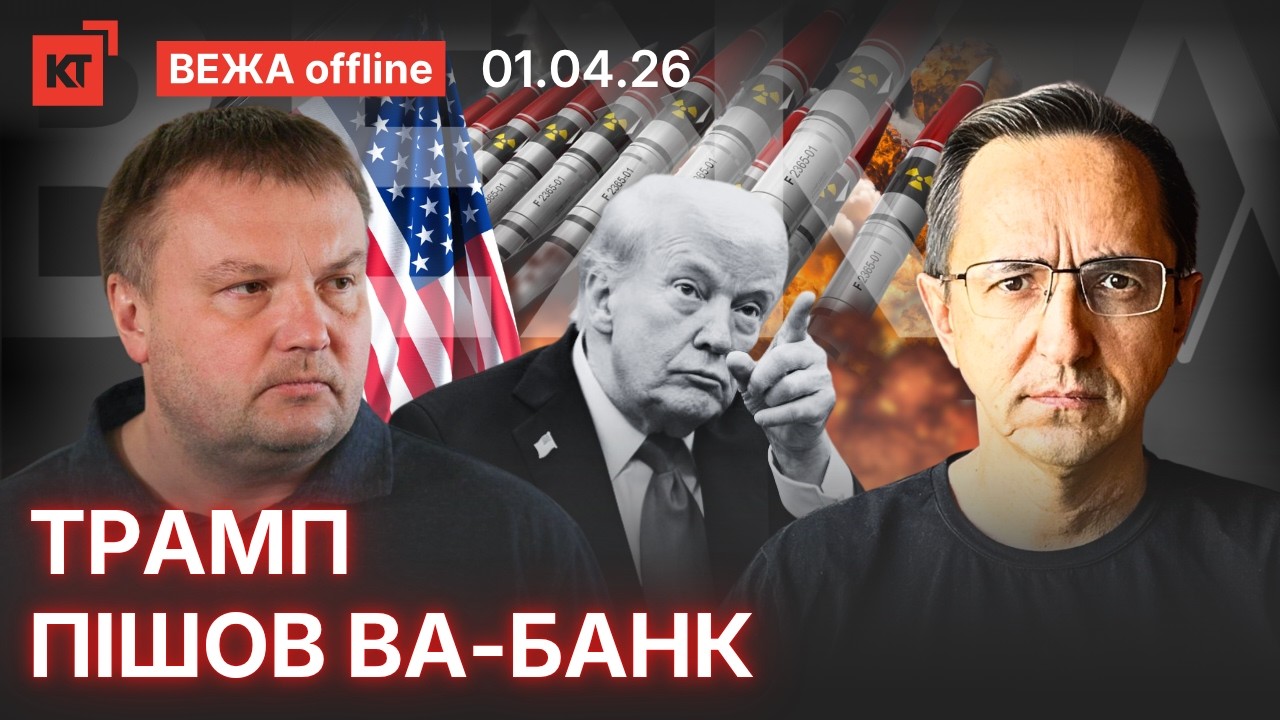
On April 1, a discussion took place at the Center for Public Analytics "Vezha" with its director Valerii Klochok and political scientist Vadym Denysenko, head of the "Dylova Stolitsa" think tank. The focus was on potential US military action against Iran and the resulting geopolitical and economic consequences for Ukraine and Europe.
The highlight was the expected address by US President Donald Trump regarding the Iran situation and the likelihood of a limited ground operation. Denysenko noted that while the US is concentrating military assets in the region, a large-scale intervention seems unlikely. Trump is expected either to announce further negotiations or a limited operation, which could influence oil markets and escalate tensions.
They also discussed challenges in garnering broad international support for the US; most allies have refused to assist Trump, complicating his strategy. The panel analyzed risks of escalation, including the potential for a humanitarian and energy crisis in the Middle East and a sharp rise in energy prices globally.
Special attention was paid to the Hungarian elections scheduled for April 12. Experts weighed scenarios of victory for either the ruling or opposition parties and their impact on the European Union’s decision to grant Ukraine a €90 billion loan. It was noted that even if the opposition wins, global risks, particularly if the Iran conflict drags on, remain; a protracted war might trigger a global energy shortage and further political challenges for Ukraine.
In conclusion, the experts emphasized the need for readiness and alternative sources of funding, as world events are unpredictable and the situation in Ukraine may change rapidly.