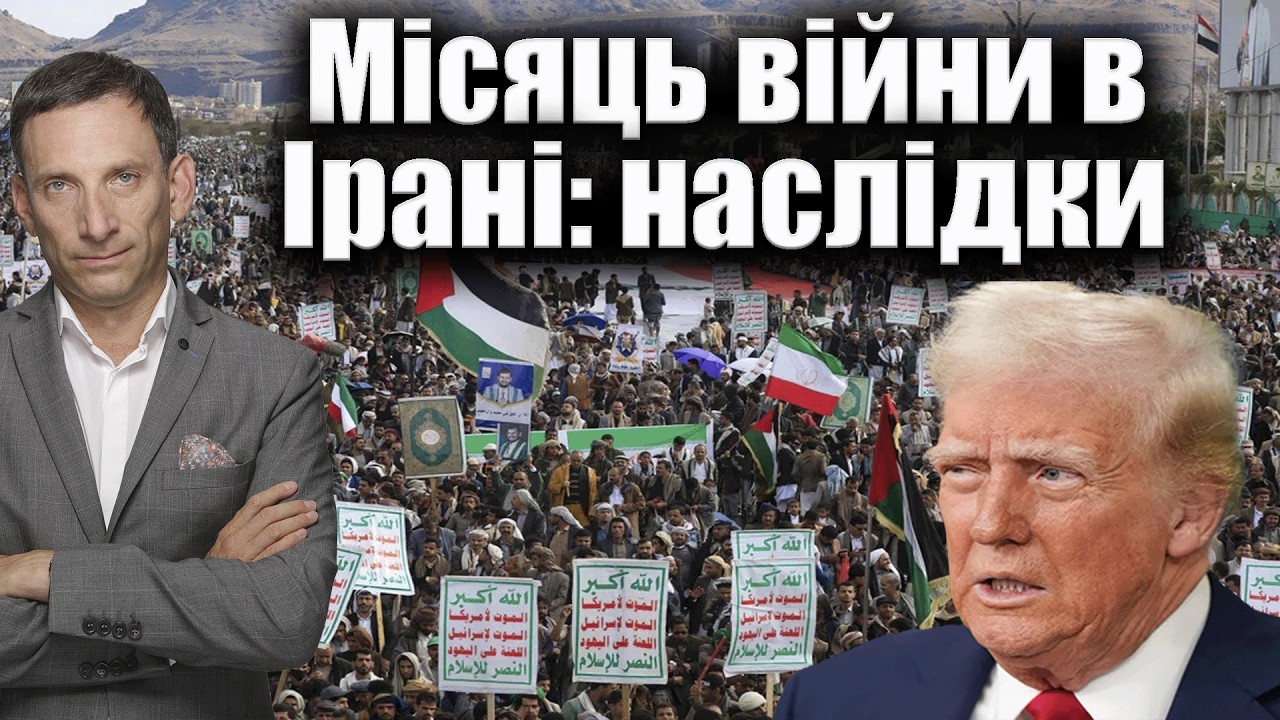
The large-scale war in the Middle East, ongoing for a month, has significantly altered the global situation. The US and Israel’s war against Iran has affected not only the region, but also Ukraine. Contrary to expectations of a quick collapse or reform of the Iranian regime, Iran retained military potential and the ability to attack Israel and Gulf countries, blocking the Strait of Hormuz. This resulted in an energy crisis and a security deficit globally.
The regional conflict led to a shortage of modern weaponry now needed both in the Middle East and for Ukraine. The situation demonstrated that only the armed forces of Ukraine and Russia possess experience in modern warfare. Meanwhile, Russian troops undermine the reputation of the US and the entire democratic world. Ukraine shares its experience with allies to help end the Middle East war and maintain support in its own struggle.
One main beneficiary of this war has been Vladimir Putin: rising energy prices forced the US to seek Russia’s mediation, weakening sanction policies. India and China are increasing Russian oil purchases, and the EU is delaying a full refusal of Russian energy carriers — these trends empower Russia, while Ukrainian strikes on Russian fuel infrastructure partially offset this effect.
The war also exposed the US military’s unpreparedness for a protracted conflict. The “Iranian effect” of surprises highlighted Western and American vulnerability in military technologies. Iran outplayed the West’s expectations, proving the effectiveness of its drones and resilience under sanctions.
Political logic shows that both Moscow and Tehran are interested in prolonging wars to retain elite stability and weaken their opponents. Experience demonstrates that regime change with airstrikes alone is unrealistic — as seen in Serbia and Japan.
The conflict’s price is broader than oil price increases; it impacts global supply chains, causes economic turbulence, and degrades overall regional security. Investments are now at risk and American presence no longer guarantees stability.
Global politicians and society are seeking ways to answer these new challenges. Energy independence and effective military strategy become vital issues for global stability and security. According to Portnikov, Ukraine must share its experience and preserve its subjectivity in this new world order.