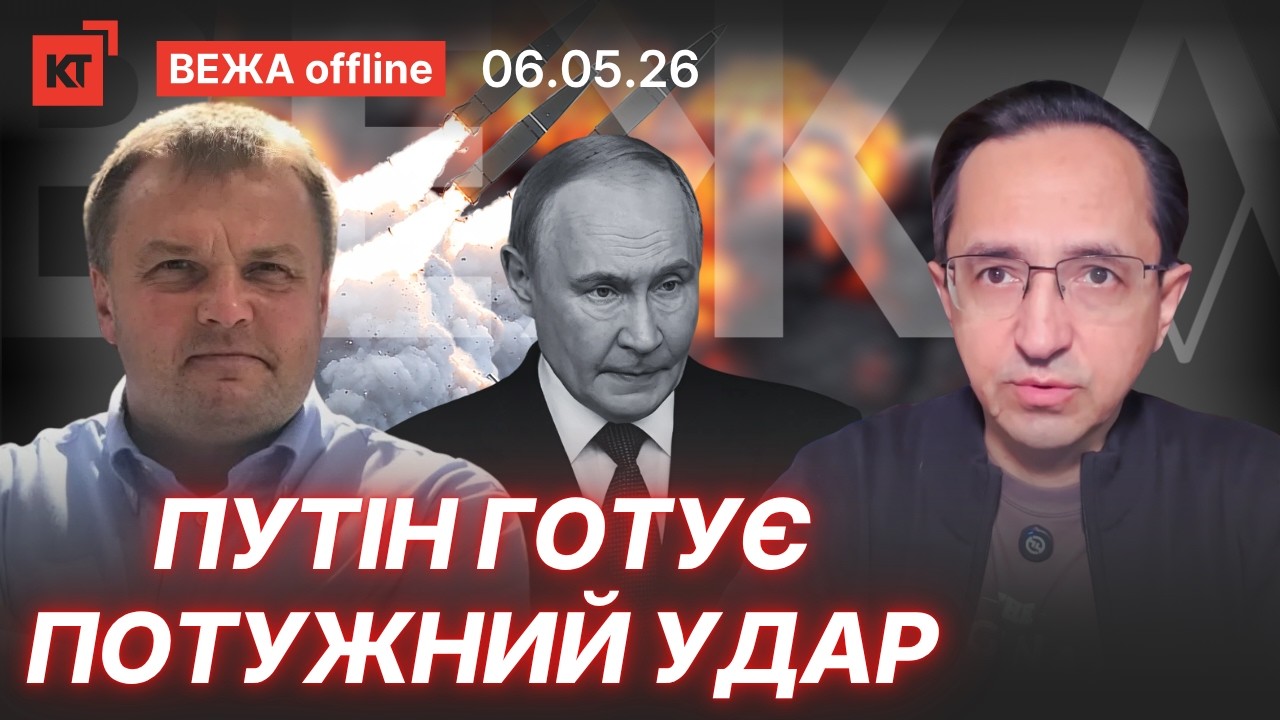
On May 6, the VeZha Center for Public Analysis aired an interview with Vadym Denysenko, head of the think tank DiloVa Stolitsya and a political expert. The main focus was on heightened discussion around the proposed 'ceasefire' before May 9, positions of Russia, the USA and Ukraine, and global prospects for peace talks.
Denysenko noted that the initiative for a ceasefire originated with Russia, then was reinterpreted by Ukraine, but neither side actually implemented it. He believes it was crucial for the Kremlin to guarantee calm on May 9, a date with symbolic political meaning. This involved back-channel contacts, including Putin appealing to Donald Trump to influence Kyiv; however, there is no evidence of success.
Russia continues nuclear blackmail, signaling readiness to escalate, but Denysenko is convinced the Kremlin will not use nuclear weapons—doing so would mean the end of Putin’s regime. Conversely, Ukraine raised the stakes by proposing its own timing for a ceasefire, making compromise impossible and rendering strikes on Russia on May 8–9 inevitable.
Denysenko suggests that to break the stalemate, mediation by a third party such as the US, Turkey or Saudi Arabia may be needed. However, even a short truce would not fundamentally alter the situation: Russia’s strategic goal remains Ukraine’s total defeat, and Moscow is unlikely to stop the war until that is achieved.
The interview also addressed reports on Russia’s preparations for massive missile strikes, the logic of psychological pressure on societies, and analyzed the divergent approaches in US policy, Trump’s inner contradictions, and mediation efforts involving Iran. According to Denysenko, the current negotiation deadlock can only be overcome by involving China, Turkey, and a broader coalition. Until then, all sides appear content with the stalemate. Only a clear recognition of this deadlock and a new diplomatic model could bring change.